What to check before signing and collecting a used car
Reconcile documents, written promises, financing, keys, insurance, and transfer responsibilities at the final purchase stage.
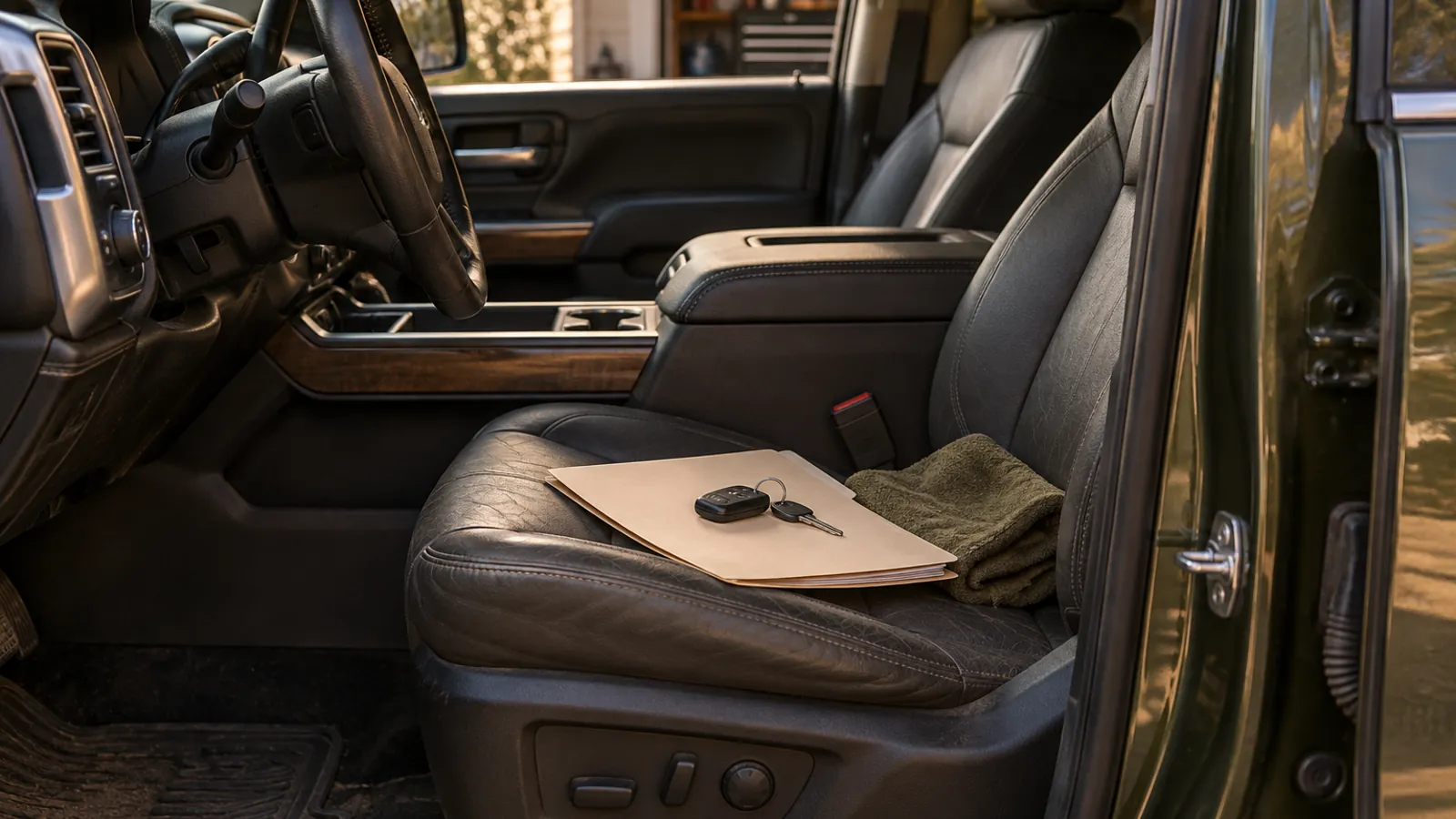
Before signing, match the final documents to the exact vehicle and the agreement you intended to make. Verify price, financing, selected products, warranty language, promised work, and transfer responsibilities. Read every document while you can still ask for corrections. A handover appointment is not a reason to accept a mismatch, sign an incomplete form, or rely on a promise that paperwork will be fixed later.
Bring the evidence you negotiated from
Keep the original listing, itemized offer, inspection findings, agreed repair promises, product decisions, trade figures, and financing information available. Make a short reconciliation sheet rather than trying to remember every conversation. Identify which documents are final and which were only estimates. If a figure changed legitimately, ask for a clear explanation and an updated breakdown before you decide whether to accept it.
Check the VIN on the car and all relevant documents. Confirm the stated mileage, specification, included accessories, and any history disclosures. If a different vehicle has been substituted, restart the evidence review rather than treating it as equivalent. Similar appearance and model year do not mean that the inspection, reports, insurance quote, or negotiated conditions apply to another VIN.
Read price and financing as separate checks
First reconcile the acquisition total: vehicle price, taxes, charges, and selected products. Then check the sources of payment: cash down, trade equity, other credits, and amount financed. Finally read the loan terms and disclosures. A monthly payment that matches your expectation does not prove that the amount financed, term, APR, or total payments are unchanged.
For a trade with a lien, confirm the current payoff and written responsibility for resolving it. Keep monitoring the old lender’s account until completion is verified. For a private transaction with an existing lien, use the verified lienholder and agency process. Do not assume that handing over keys or signing a bill of sale releases a debt or establishes a completed title transfer.
Check warranty language and selected products
For a dealer vehicle, read the Buyers Guide and compare it with the contract. Distinguish a warranty from a separately purchased service contract. Ask what is covered, who is responsible, how claims work, and which exclusions or deductibles apply. Do not infer coverage from a phrase such as certified or fully inspected. Read the actual documents for the exact vehicle.
| Document or item | Check before completion |
|---|---|
| Buyer order or sale agreement | VIN, price, fees, included items, written conditions |
| Buyers Guide where applicable | Warranty/as-is statement and consistency with agreement |
| Financing disclosures | Amount financed, rate/APR, term, finance charge, total payments |
| Product agreements | Selected status, price, coverage, exclusions, cancellation terms |
| Title and lien documents | Correct process, signatures, required supporting material |
| Repair completion evidence | Work matches the written promise and identified car |
If terms conflict, pause and request correction. For covered dealer warranty terms, the FTC explains that the Buyers Guide takes priority over inconsistent sales-contract language. Keep the Guide with your agreement and seek qualified advice about other material discrepancies. Keep a complete signed copy of each agreement.
Confirm physical handover
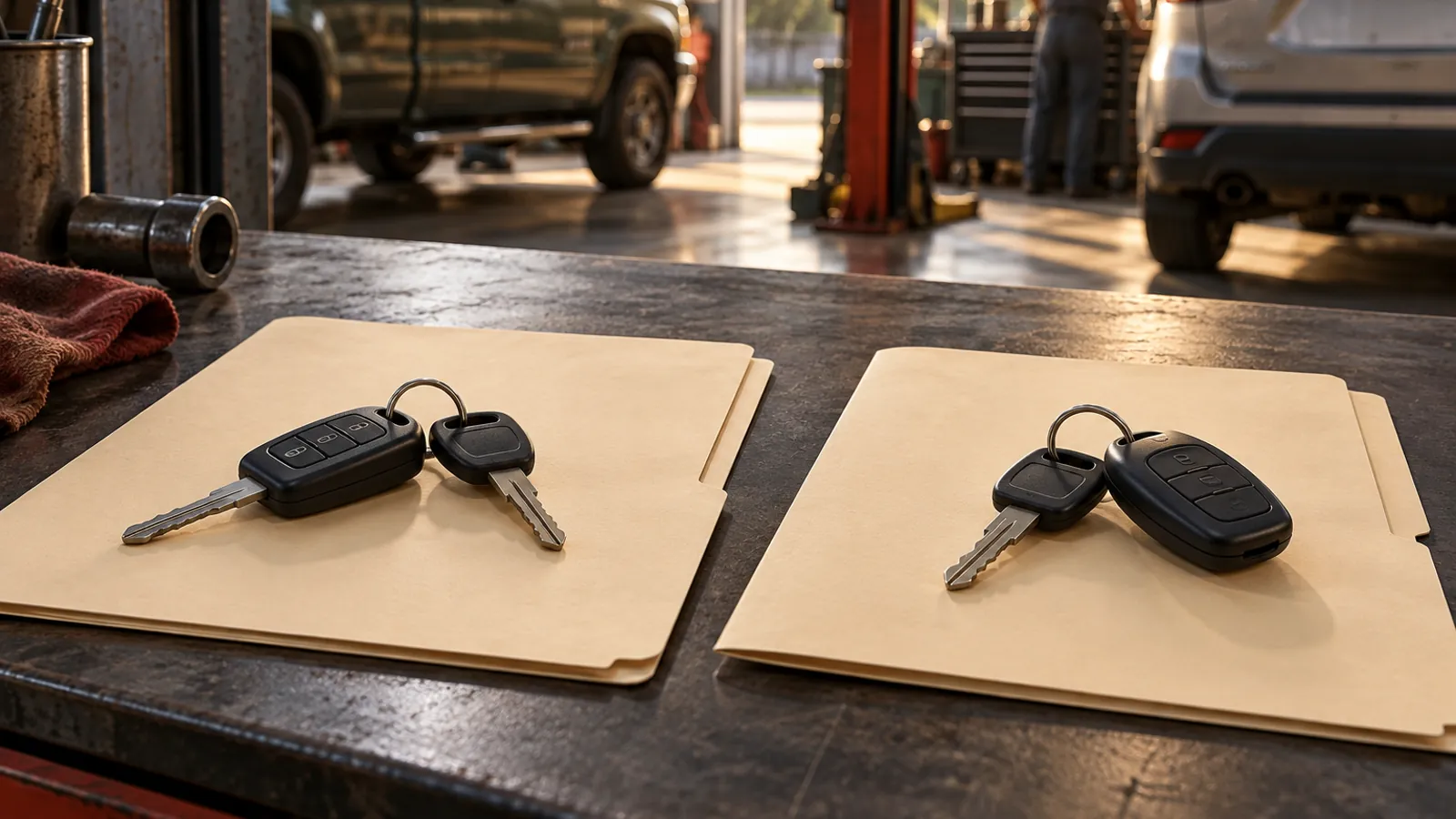
Count keys, remote devices, charging equipment where relevant, spare-tire equipment if included, manuals, and other agreed accessories. Check that promised work has been completed and obtain the supporting record. Ask whether a reinspection is appropriate for important repairs. Photograph the vehicle’s condition with permission, without capturing unnecessary personal data from documents or connected screens.
Confirm insurance arrangements before taking possession and ask the relevant agency about plates, temporary permits, registration, inspection, and tax requirements. An unfamiliar state’s rules should not be guessed from another purchase. If you cannot legally or safely drive the car, arrange an appropriate alternative rather than assuming a signed sale agreement is sufficient permission to use it on public roads.
Plan the first days of ownership
Store the transaction records securely and create a task list for any remaining agency steps or agreed follow-up. Review the manufacturer’s maintenance information and establish what is documented versus unverified. Set up personal accounts only after removing prior-user information through the appropriate manufacturer procedure. Do not keep another person’s navigation history, contacts, or account access simply because it remains in the vehicle.
Return to the buying plan for a process overview, loan and trade equity for financing arithmetic, and out-the-door budgeting for purchase costs. The warranty guide explains the evidence to request, while the private-sale guide addresses a different transfer setting. If an issue appears after purchase, preserve documents and contact the appropriate business, agency, or qualified adviser rather than relying on an assumed cancellation right.
Make the final appointment long enough to review the documents while the relevant people are available to explain them. If a contract is delivered electronically, download the complete version rather than saving only the signature screen. Check attachments and separate product agreements as well. Keep your copies somewhere you can retrieve them independently of a dealer portal or a temporary message link.
Continue in this section
- A used car buying plan: shortlist to handover
- How to calculate a used car out-the-door budget
- Check the amount financed and your trade-in equity
FAQ
Can I sign now and fix a wrong number later?
Ask for the correction before signing. A verbal assurance is not a substitute for accurate final documents. If you do not understand a term or discrepancy, pause and seek independent advice before committing to it.
Does taking delivery mean financing is final?
Do not assume it. Ask whether approval and the contract are final and what conditions remain. Read any conditional-delivery terms carefully and obtain advice if you do not understand what could change after you leave.
Should I expect a second key automatically?
Only rely on the agreed included items. Confirm the actual key count before completion and obtain a replacement quote if the difference affects your offer. A manual describing multiple keys does not establish what the seller will hand over.
Sources
- FTC dealer buying guidance — purchase documents and warranty information.
- CFPB Truth-in-Lending disclosures — financing terms to reconcile.