Mileage versus condition: what should change your offer?
Compare mileage with maintenance and observed condition without inventing a per-mile discount or ignoring upcoming work.
Mileage helps describe how much a car has traveled; it does not describe everything that happened during those miles. Compare the odometer with maintenance evidence, inspection findings, age, and how the vehicle fits your use. Do not automatically choose a lower-mileage car or apply a fixed cents-per-mile adjustment to every model. The question is which differences you can verify and what they mean for your ownership costs.
Establish whether the mileage is credible
Record the displayed reading and the date. Compare it with available title information, service invoices, and history events. Arrange the entries chronologically, noting whether each is miles or kilometers. An apparent decrease needs explanation, but a single conflicting entry does not by itself establish fraud. Ask the source to clarify the record and keep the original evidence.
Check the VIN on every document before assuming an invoice belongs to the car. Records without an identifiable vehicle or an adequate work description may be less useful. Missing records are uncertainty, not proof that maintenance never occurred. Equally, a seller saying that all maintenance was done is not equivalent to a dated invoice. Treat the difference explicitly in your comparison sheet rather than silently accepting the more reassuring story.
Compare age and use together
Two cars with the same odometer reading may have different needs. Time affects items such as rubber components and fluids as well as distance, but the applicable maintenance schedule depends on the vehicle. Ask for the manufacturer’s schedule for the exact year and powertrain. Identify requirements based on time, mileage, or operating conditions, and ask an independent mechanic which items are due or cannot be verified.
Avoid diagnosing a car from its use label alone. Highway, city, rental, and commuter descriptions are incomplete summaries. A well documented vehicle that received appropriate care can be easier to assess than one with a more appealing story and no supporting records. Do not claim a fixed benefit for highway miles or a fixed penalty for rental use. Inspect the candidate and price alternatives with similar evidence quality.
Turn inspection findings into a work plan
Ask the inspector to distinguish immediate safety work, maintenance due soon, and optional cosmetic improvements. Request the observed condition and the limits of the inspection. A written estimate should identify the vehicle, labor and parts assumptions, and any diagnostic work still needed. A noise that requires further diagnosis is not the same as a confirmed repair with a firm price.
| Finding | Evidence to obtain | How to use it |
|---|---|---|
| Tires near replacement | Measurements and tire quote | Add a near-term cost scenario |
| Missing service interval | Schedule and records search | Treat completion as unverified |
| Warning light | Diagnostic assessment | Pause until its cause is understood |
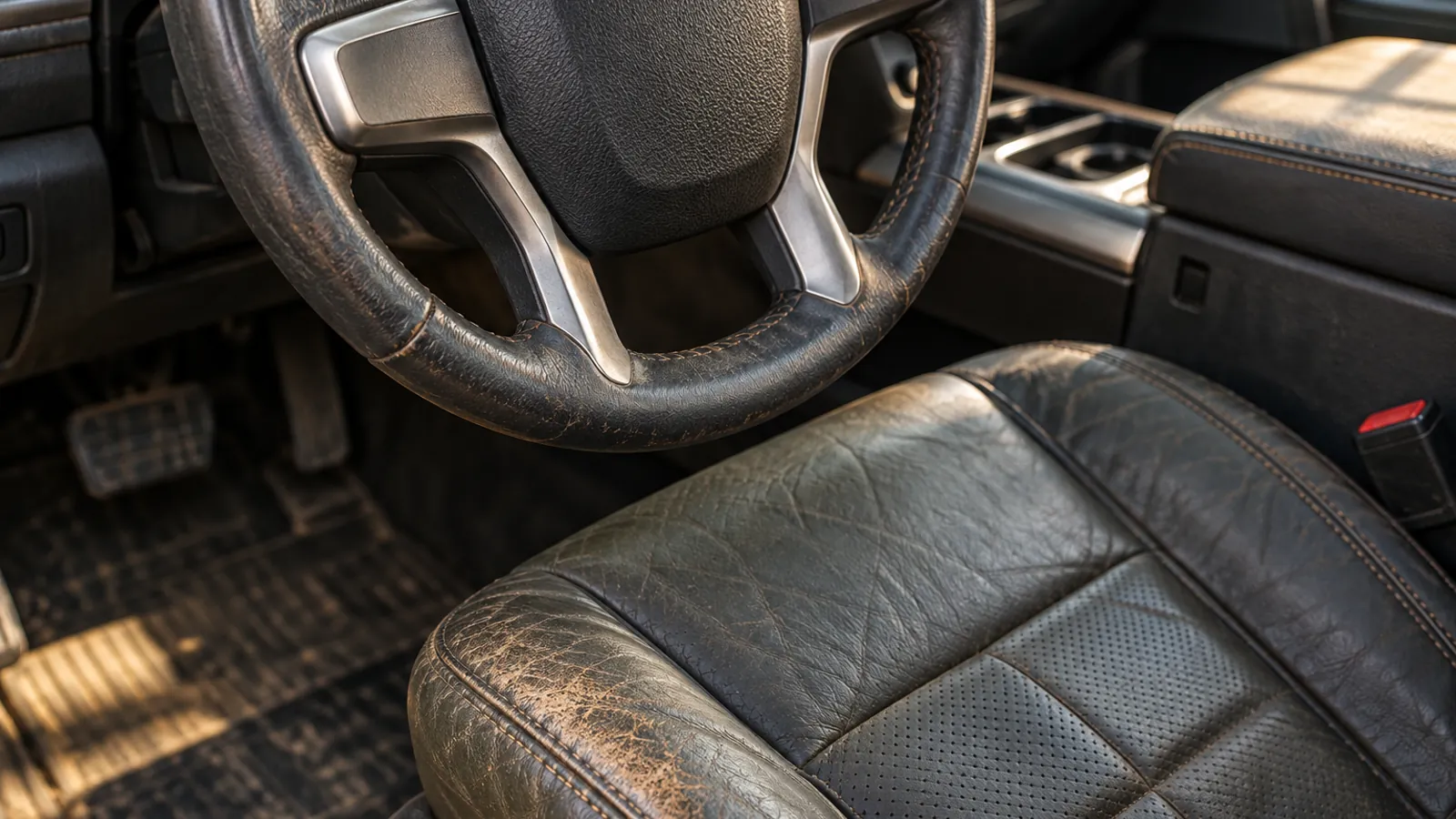
| Worn interior | Photographs and comparison | Assess personal suitability and resale context |
| Mileage conflict | Original dated records | Seek clarification before relying on the reading |
Do not assume every visible defect is cheap or every clean surface indicates good maintenance. Fresh detailing can improve presentation without changing the underlying mechanical condition. A test drive and professional assessment serve different purposes.
A worked comparison without a per-mile rule
Suppose, purely illustratively, Car A costs $17,500 with 70,000 miles and Car B costs $18,400 with 55,000 miles. Car A has documented recent work. Car B has an independent quote of $1,200 for immediate work. Their simple acquisition-plus-immediate-work figures are $17,500 and $19,600 before taxes, fees, financing, or future maintenance. This arithmetic does not predict either car’s remaining life.
Now ask whether A has its own upcoming needs, whether B’s work has been fully diagnosed, and whether the cars share the same trim and title context. If those questions remain open, show a range or an unresolved item rather than declaring a winner. A $2,100 apparent gap can narrow when other differences are identified. The comparison is a decision aid, not an engine-life calculator.
Decide what uncertainty you will accept
Use the value-range method to select closer alternatives and the trim guide to avoid specification errors. If the readings do not align, follow the odometer review process. For actual costs, keep a separate ownership budget rather than hiding every assumption in a single offer number.
Before offering, write down what you know, what remains unknown, and who can resolve it. A mechanic can advise on observed condition and maintenance needs. The relevant record source or motor vehicle agency can address certain record questions. The seller can supply documents, but should not be your only source for a disputed history. If the remaining uncertainty exceeds your budget or tolerance, choose another candidate rather than inventing a discount that feels large enough.
Continue in this section
- How to build a defensible used car price range
- How to compare used car trims and equipment accurately
- Compare used cars by ownership cost, not just price
FAQ
Is lower mileage always worth more?
It may influence market comparisons, but there is no universal premium. Condition, specification, records, title history, location, and seller channel also matter. Use matched alternatives rather than multiplying a mileage difference by an arbitrary rate.
Does a full service history replace an inspection?
No. It records documented past work, while an inspection assesses what can be observed now. Check that the invoices relate to the VIN and ask about anything that remains outside the inspector’s scope.
What if the seller cannot find records?
Ask whether copies can be obtained from the servicing business with appropriate permission. Do not assume a future promise will resolve the gap. Decide using the evidence available before you commit and budget for unverified maintenance only after discussing it with a mechanic.
Sources
- NHTSA odometer fraud guidance — comparing readings and identifying concerns.
- FTC used car buying guidance — independent mechanical inspection.